.png)


Fencing Sabbatical: A Surprising Dive into Swordsmanship
At Hwa Chong, Sabbatical Week gives students the chance to explore new interests and step into experiences they may not have chosen at first. In this reflection, Jiye shares how the Fencing Sabbatical turned an unexpected second choice into an engaging week of technical learning, friendly competition, and new appreciation for the sport.
Written by: Zhao Jiye (3P3, 2026)
For the Term 2 Sabbaticals, I was assigned to fencing even though it had been my second choice. At first, I was not too excited, as I had hoped to join another sabbatical. To my surprise, however, fencing turned out to be both fun and technical.
On the first day, we were taught about the different types of weapons, how to wield them, and how they are used in fencing. For example, in sabre, points are scored by hitting the opponent with the edges of the blade, but only hits to the upper half of the body are counted. For foil and épée, points are scored through a stabbing motion, but the target areas are different. In foil, scoring is limited to the torso, and it is the lightest weapon of the three. Épée, on the other hand, is the heaviest and most physically tiring to hold. To make up for this, it has a larger target area, as a hit on any part of the body counts as a point.
Next, we learnt some basic footwork drills. These included how to stand at rest, where our feet formed an L shape, as well as how to get into the on guard position, advance, retreat, lunge forward to attack, and recover from a lunge. We also had the chance to practise wielding the weapon, parrying attacks, and evading attacks with a partner using the foil. This covered the basic skills we needed to know.

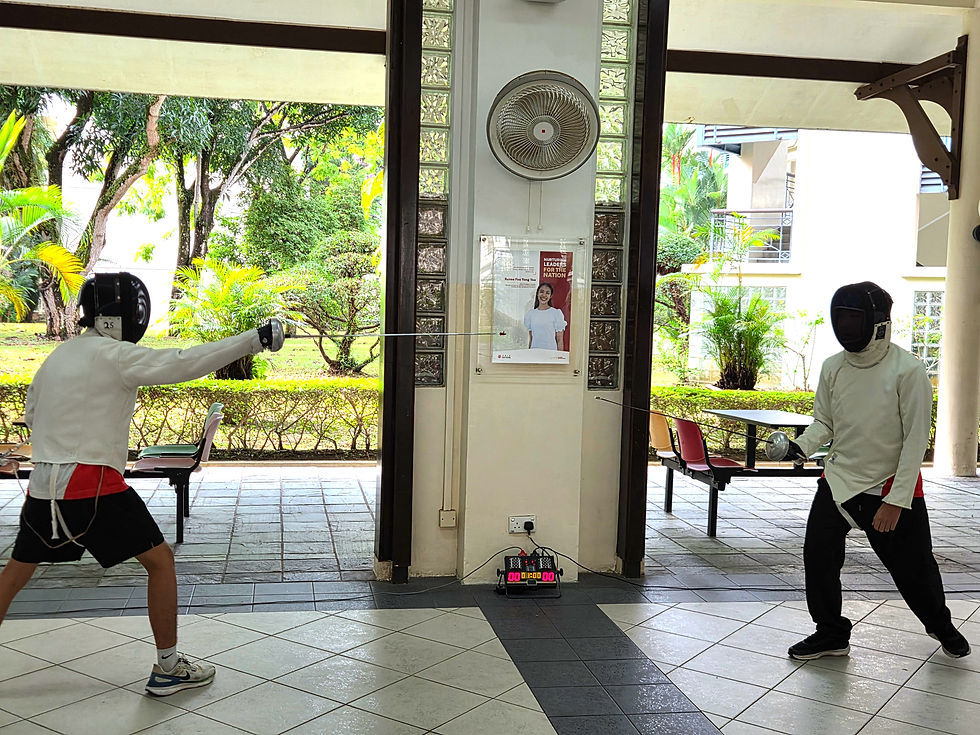
From the second day onwards, we were given the necessary protective gear to ensure our safety during sparring sessions. This included a metal mesh mask, chest protector, plastron, and padded jacket. Although the gear was hot to wear, it was absolutely necessary for safety.
Day 2 felt almost like a free-for-all, as we could spar with anyone within our assigned groups. For sparring, we used the épée because it allowed for a larger contact area. This gave us the chance to apply the basic skills taught on the first day. It also required us to think critically about what to do during each match, based on the situation and how our opponents had sparred in previous rounds.
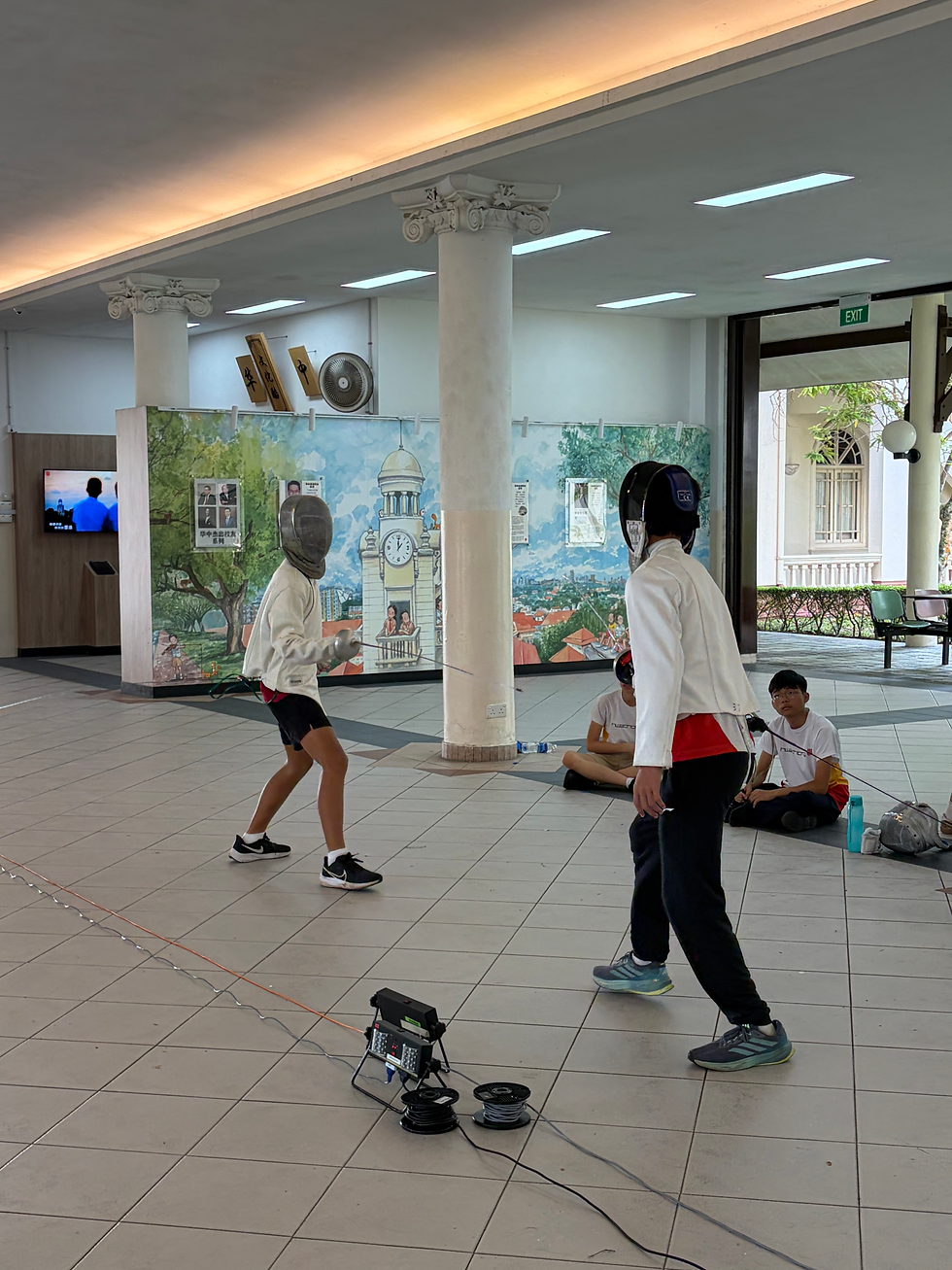
On Days 3 and 4, we competed with every individual in our group to determine who would face whom in the tournament, which took place in the second half of Day 4 and continued into Day 5. It was similar to what we did on Day 2, but this time, there were stakes involved. This got most of our hearts pumping as we all became more competitive. The remaining days went by smoothly and gave me a new appreciation of just how enjoyable this sabbatical really was.
I would highly recommend this sabbatical to those who are interested in how fencing works, want to learn some technical skills, or simply wish to experience swordsmanship. It does not require you to be extremely strong or have outstanding stamina, as things can happen in the blink of an eye, literally. For those who have not tried anything like this before, I would strongly recommend it. This is truly a sabbatical that deserves more attention.

