.png)


Wild/Well-Being: Finding Calm, Challenge and Connection
At Hwa Chong, Sabbatical Week gives students the opportunity to explore learning beyond the regular classroom, including programmes that nurture both curiosity and well-being. The Wild/Well-Being sabbatical invited students to discover how nature, play, reflection and shared experiences can support mental and emotional wellness. Through visits to green spaces, team challenges, mindfulness activities and creative projects, students learnt that well-being is not found in one place or activity alone, but built through connection, awareness and the courage to try something new.
In this reflection, Raydon shares how the week helped him slow down, bond with others and appreciate well-being in unexpected ways.

Written by: Law Jing Xiang, Raydon (1O3, 2026)
In the blink of an eye, the Term 2 Sabbaticals were over. Looking back, I was grateful for the opportunity to participate in Wild/Well-Being, a one-week programme that felt, as always, uniquely Hwa Chong. It was my first-choice sabbatical, and through it, we explored both nature and indoor spaces to experience how being “wild” can support our well-being.
On Day 1, we did some icebreakers to get to know our fellow “comrades” better. We then participated in a design challenge to help a plant survive until Friday using an automated water dispenser. The challenge was to get just the right amount of water flowing constantly, without drying out or drowning the plant. The Well-Being Centre (WBC) was filled with laughter as teams tried out creative methods and designs. The day ended with a presentation of the various designs and a briefing for Day 2 at Jurong Lake Gardens.
On Day 2, we reported straight to Jurong Lake Gardens for a guided tour, where the guide introduced us to sustainable technology and nature. We learnt about the different flora and fauna found in the gardens, and even had the chance to spot a family of otters eating! After the tour, we participated in a mindfulness activity to slow down and appreciate the nature around us.

On Day 3, we went for an escape room activity. I remember feeling nervous at first as the posters looked intimidating. However, when my team entered the room, I realised that I had been overthinking, as the atmosphere was not scary. We worked together to solve difficult puzzles to save ourselves from the terracotta warriors and their trap. Even though we did not manage to finish on time, we still felt a sense of accomplishment and joy because we forged new friendships during the activity.

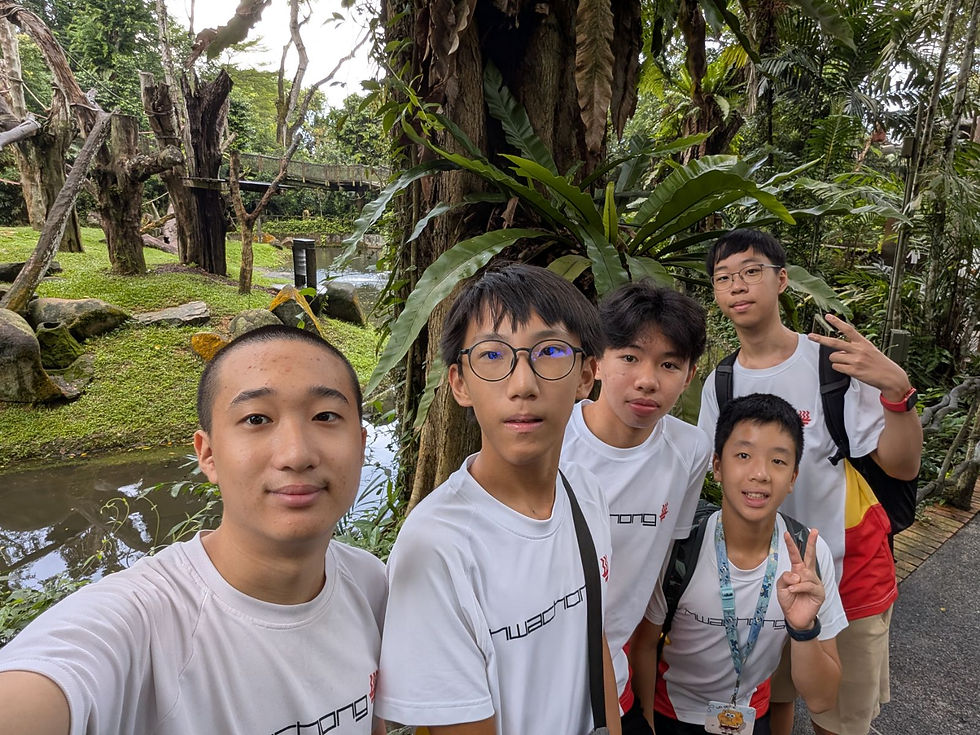
On Day 4, we went to Mandai Zoo. After reporting to school, we waited quite a long time for the bus. Unexpectedly, we were greeted by a very comfortable coach, which made the wait feel worthwhile. I guess this was for our well-being too, right? We then completed a series of tasks around the zoo, which required us to act like animals, take pictures, and answer questions that allowed us to reflect on our High School life so far. It was another unique and fun experience.
Finally, on Day 5, we wrapped up all the activities. We were given a “Happiness Project”, where we generated ideas to help uplift a specific community in Singapore. At the end of the day, the plants were graded based on their health and the aesthetics of the pot. Prizes of snacks were given out as a perfect end to the sabbatical.
Overall, the sabbatical was an extremely meaningful and interesting experience, where I got to try new things, challenge myself, and make new friends. It exposed me to activities I would normally not do, and I am grateful for the chance to have been part of it.

